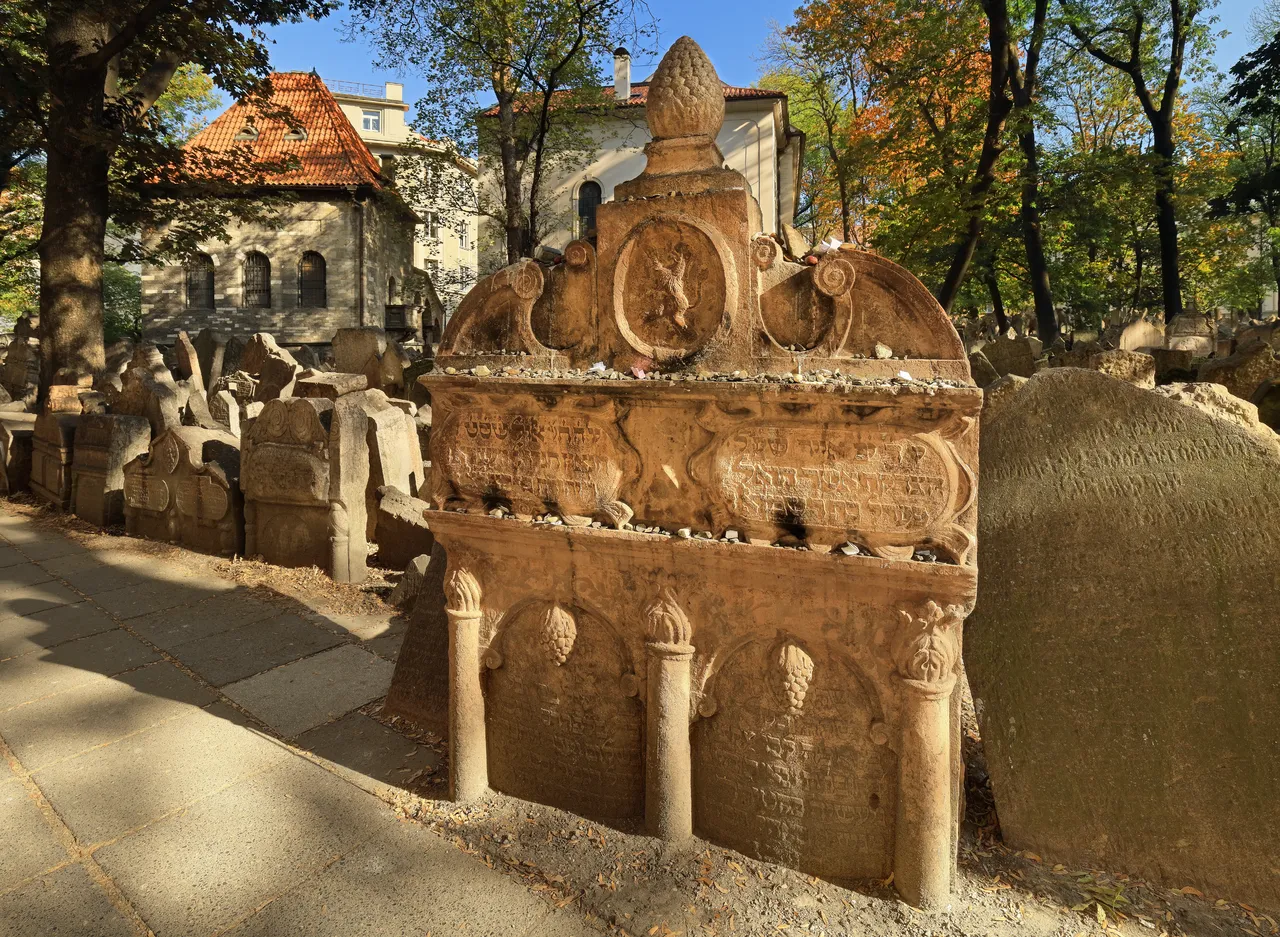
Rabbi Judah Loew ben Bezalel
Known as the Maharal of Prague, he was a renowned Talmudic scholar and philosopher associated with the Golem legend.
Locate the tomb marked by a lion emblem near the entrance.
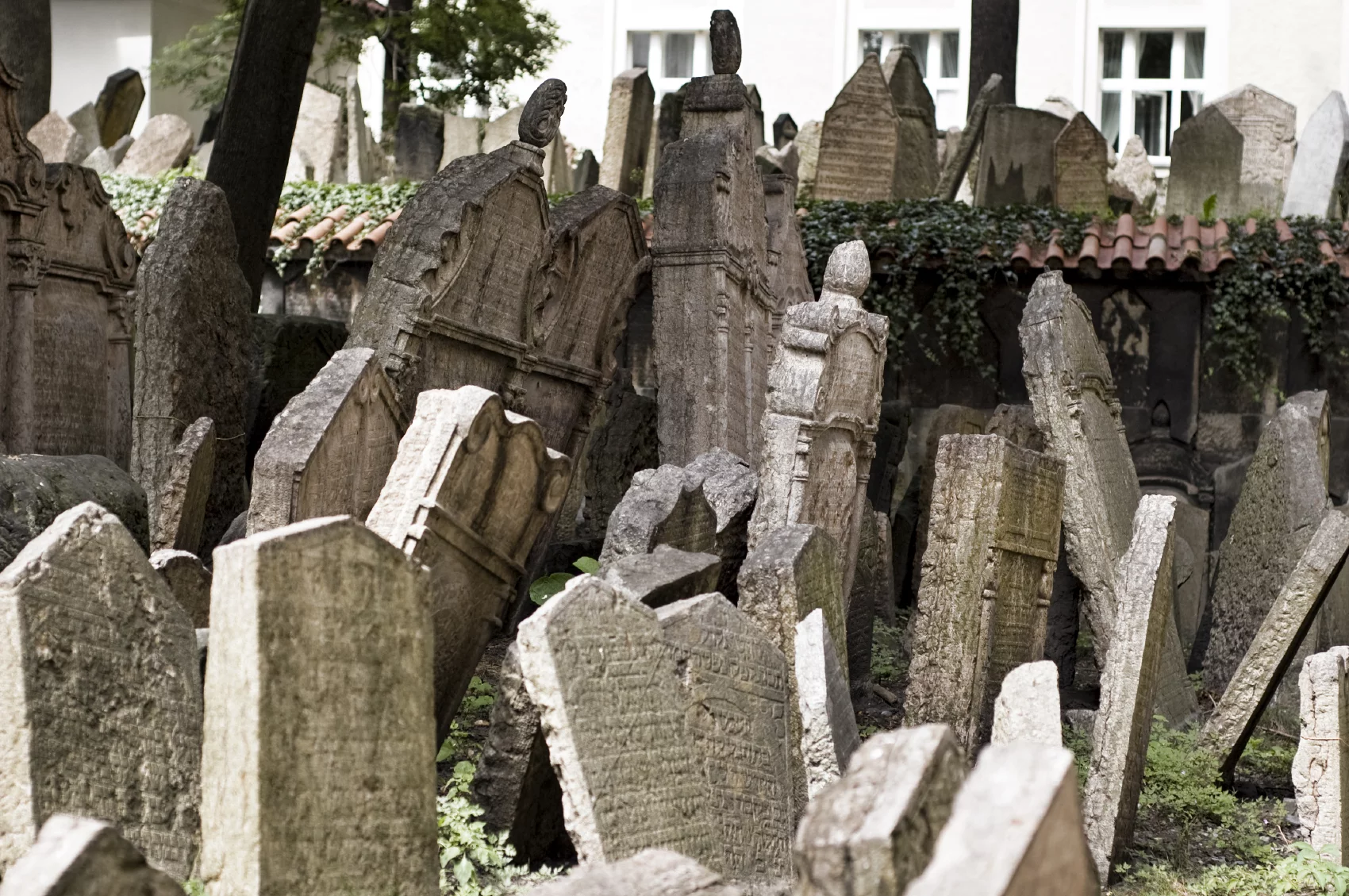
The Old Jewish Cemetery in Prague's Josefov district holds twelve thousand visible tombstones across twelve layers of burials dating from 1439 to 1787. Navigating the crowded graveyard to find specific markers requires knowing where to look and what makes each figure historically significant.
Quick answer
The Prague Jewish Cemetery's most visited graves include Rabbi Judah Loew ben Bezalel (the Maharal, creator of the Golem legend), astronomer David Gans, mayor Mordechai Maisel, and historian David Oppenheim. These tombstones cluster in the cemetery's northwest and central sections, marked by pebbles left by visitors and distinctive Hebrew inscriptions. The narrow pathways and overlapping stones make a site map or guided orientation essential for first-time visitors.
The Old Jewish Cemetery contains more than one hundred thousand bodies buried in layers up to twelve deep, but fewer than twenty graves draw consistent pilgrimage. Rabbi Judah Loew ben Bezalel, who died in 1609, occupies the cemetery's most visited plot near the Klausen Synagogue entrance. His Renaissance-era tombstone bears a lion relief—a reference to his Hebrew name—and visitors cover it with prayer notes and pebbles, following the Jewish tradition of marking respect without flowers. The Maharal's reputation as a Talmudic scholar and the legendary creator of the Golem makes his grave the cemetery's de facto anchor point. David Gans, the astronomer and historian buried three rows east of Rabbi Löw, collaborated with Johannes Kepler and Tycho Brahe in Prague's scientific circles. His 1613 tombstone features a goose and a Star of David, a visual pun on his surname. Mordechai Maisel, the mayor of the Jewish Town and financier to Emperor Rudolf II, rests near the cemetery's center under a marker dated 1601. His wealth funded the synagogue that bears his name and the paving of Josefov's streets. David Oppenheim, chief rabbi and manuscript collector, lies in the southern section; his 1736 burial predates the cemetery's closure by fifty-one years. The famous graves in Prague's Jewish Quarter Cemetery span three centuries of Central European Jewish intellectual life, from Kabbalistic scholarship to Enlightenment astronomy. The uneven terrain and tightly packed stones make independent navigation difficult—tombstones tilt at conflicting angles, Hebrew inscriptions face multiple directions, and tree roots obscure pathways. Visitors who arrive when the site opens at nine benefit from smaller crowds and softer morning light that makes the engraved Hebrew text more legible. The cemetery forms one node in the Jewish Museum's multi-site ticket, which includes the Spanish Synagogue and the Ceremonial Hall, both within two hundred meters. Most first-time visitors spend thirty to forty minutes in the cemetery itself, though locating specific graves without prior research or a detailed map can extend that window. The site prohibits photography inside the adjacent Pinkas Synagogue but permits it in the cemetery grounds, where the layered tombstones and dappled shade create the visual record most associate with Prague's Jewish heritage.
“The Old Jewish Cemetery contains more than one hundred thousand bodies buried in layers up to twelve deep, but fewer than twenty graves draw consistent pilgrimage.”
The Old Jewish Cemetery serves as the final resting place for many significant figures who shaped the intellectual and political landscape of Prague's Jewish community. Visitors may observe the marked tombstones of prominent scholars, rabbis, and communal leaders among the site's dense layering of graves.
Known as the Maharal of Prague, he was a renowned Talmudic scholar and philosopher associated with the Golem legend.
Locate the tomb marked by a lion emblem near the entrance.
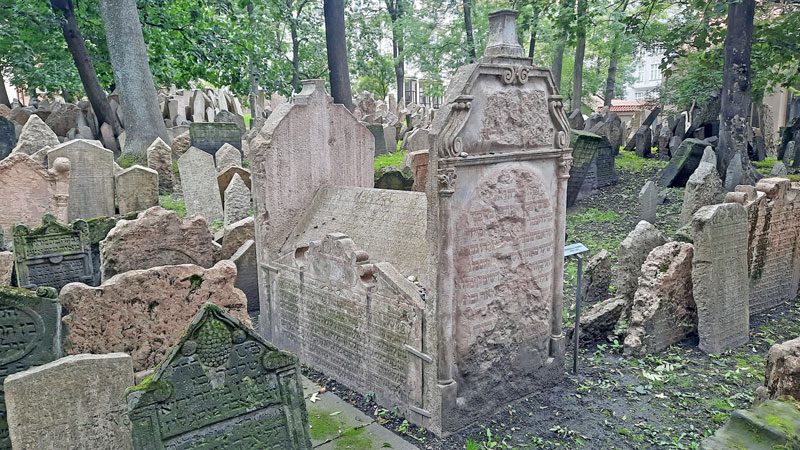
A significant benefactor and Mayor of the Jewish Town, he funded many communal projects, including the synagogue bearing his name.
Observe the distinct Renaissance-style tombstone signifying his status.
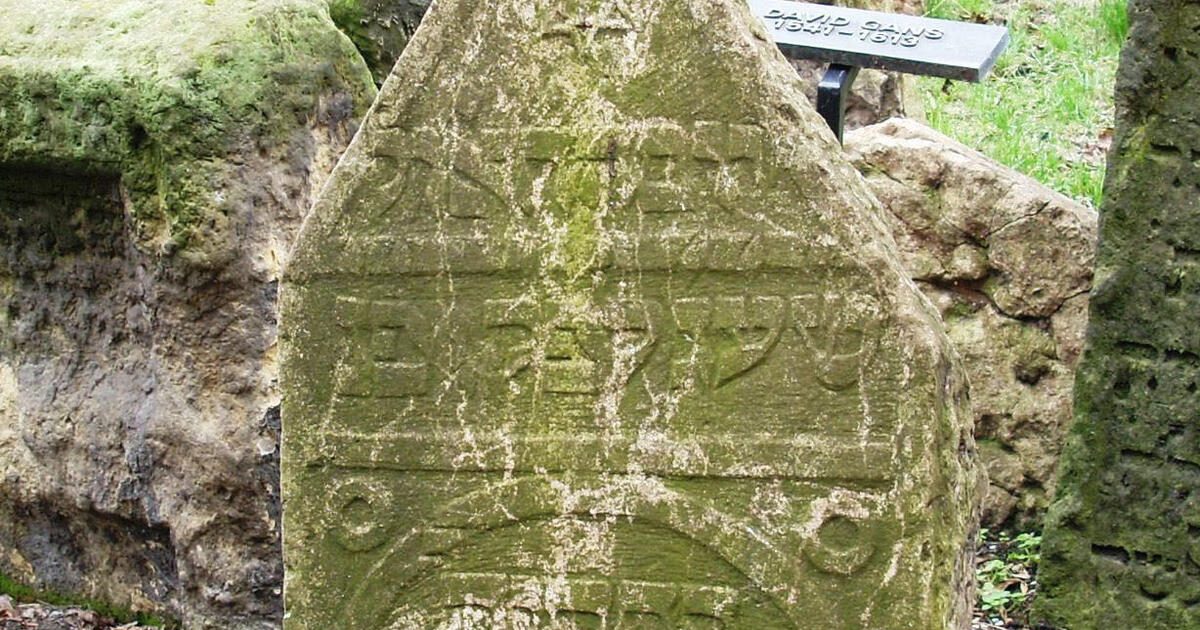
A prolific astronomer, mathematician, and historian who worked with Johannes Kepler.
Find his grave marked with a Star of David and a goose symbol.
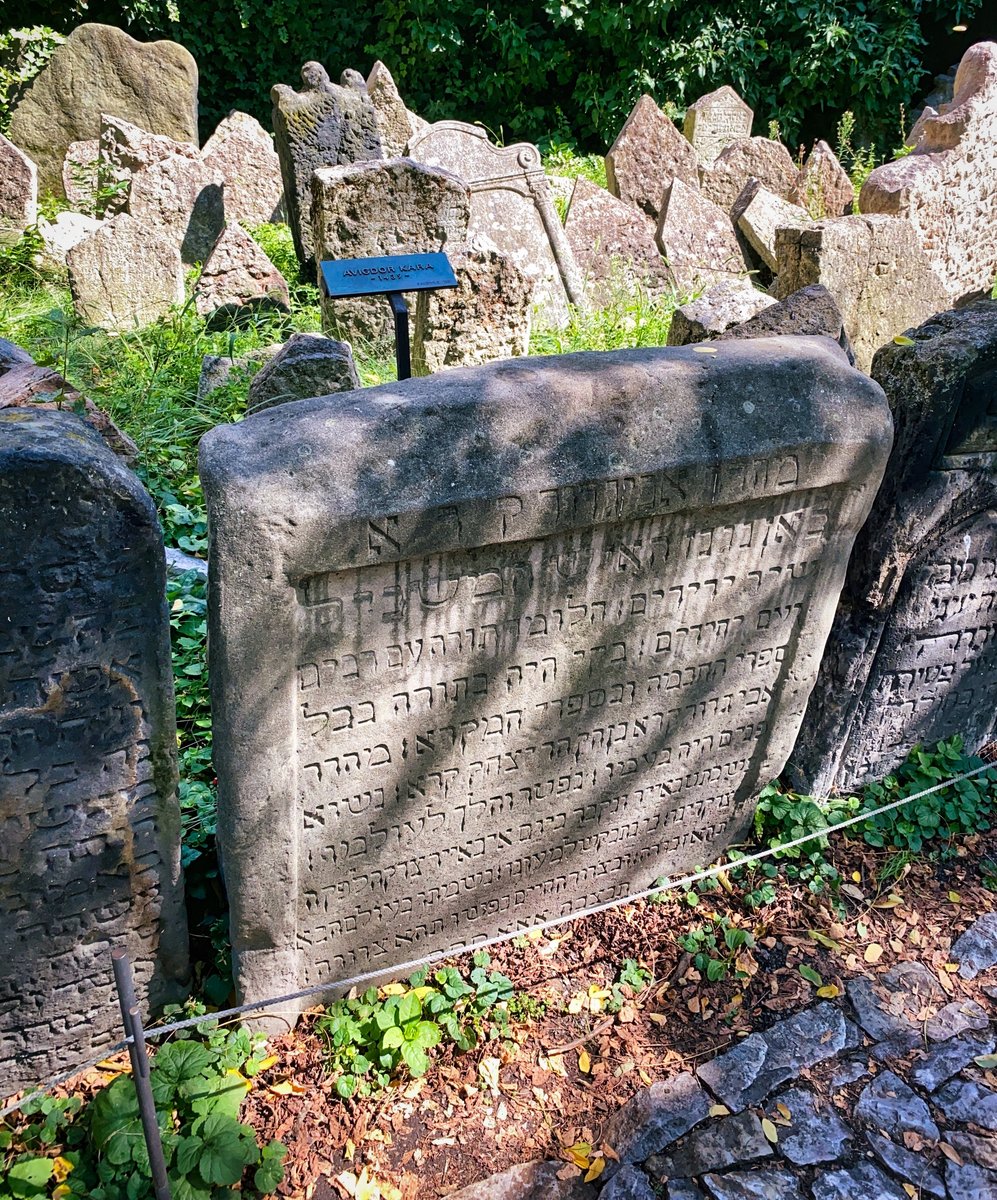
He was a respected scholar and poet who witnessed the 1389 pogrom, an event he documented in his writing.
Look for the oldest legible tombstone in the cemetery grounds.
The Old Jewish Cemetery in Prague's Josefov Quarter opened in 1439, replacing an earlier burial ground lost to urban expansion. Jewish residents of Prague faced strict prohibitions on land ownership beyond their designated quarter, leaving them unable to expand the cemetery's boundaries even as the population grew. By the mid-16th century, the small plot had exhausted its capacity. Rabbi Loew ben Bezalel, the Maharal of Prague, presided over the community during this period and was interred here in 1609, his tombstone now among the prague jewish cemetery famous graves that draw scholars and visitors alike. Space constraints forced an extraordinary solution: vertical layering of burials. Earth was repeatedly added to raise the ground level, allowing new graves to be dug above older ones. Estimates suggest up to twelve layers in some sections, with more than 100,000 burials compressed beneath approximately 12,000 visible tombstones. The oldest surviving marker dates to 1439 and belongs to Avigdor Kara, a poet who documented the 1389 pogrom. Prominent Renaissance scholar and astronomer David Gans, who collaborated with Tycho Brahe and Johannes Kepler, was buried here in 1613. Mordechai Maisel, mayor of the Jewish Town and financier to Emperor Rudolf II, received his tombstone in 1601 after funding the cemetery's expansion and maintenance. Burials continued until 1787, when Emperor Joseph II banned interments within city limits for sanitary reasons. The uneven terrain, created by centuries of layered graves, remains visible today. Tilting headstones crowd together in irregular rows, many carved with Hebrew inscriptions and symbols denoting the deceased's lineage or profession. The cemetery survived Nazi occupation and Communist-era neglect, becoming part of the Jewish Museum in Prague network after 1945. Visitors walking the narrow paths now encounter the same compressed landscape that emerged from four centuries of necessity, with weathered stones marking the resting places of rabbis, scholars, and community leaders whose influence extended far beyond the ghetto walls.
The cemetery opens as the Jewish Quarter's primary burial ground, with poet Avigdor Kara receiving the oldest surviving tombstone.
Mordechai Maisel, mayor of the Jewish Town and financier to Rudolf II, is interred after funding cemetery improvements.
Rabbi Loew ben Bezalel, the Maharal of Prague, is buried here; his grave becomes one of the most visited in the cemetery.
Astronomer and historian David Gans, collaborator with Tycho Brahe, receives his tombstone following his death.
Repeated layering of graves occurs as space runs out, creating up to twelve burial levels in some sections.
Emperor Joseph II bans further burials within Prague city limits, closing the cemetery after 348 years of use.
The cemetery becomes part of the Jewish Museum in Prague, ensuring its preservation and public access.
The Old Jewish Cemetery is open throughout the week to accommodate visitors interested in exploring the historical burial site. Please note that the site is closed every Saturday.
The best arrival window is 09:00–10:30 to avoid mid-day crowds for a quieter experience and better morning light for photography. Visiting during these early hours allows you to navigate the narrow paths of the cemetery before larger tour groups arrive.
—
Visiting Tuesday through Thursday mornings offers the lowest foot traffic.
Pleasant, 15°C to 23°C
Gardens are lush and weather is mild for walking.
Cool, 8°C to 16°C
Clear skies provide excellent conditions for viewing grave markers.
Cold, -2°C to 4°C
Visitor numbers are at their lowest, though outdoor exposure is limited.
Verdict: The optimal time for a visit is Tuesday to Thursday, arriving at 09:00 in either April or October.
The Old Jewish Cemetery is located at Široká 3 in the Josefov district, the historic Jewish Quarter of Prague. The most efficient way to reach the site is via Prague’s public transit network, which deposits visitors within a short walking distance of the entrance.
Line A (Green) to Staroměstská station
Lines 2, 17, or 18 to Staroměstská stop
From Old Town Square
For the most efficient entry, head directly to the Jewish Museum information and reservation center on Široká street, where your admission can be processed for all sites.
Everything you need to know about prague jewish cemetery famous graves
The cemetery is the final resting place of several significant historical figures, most notably the scholar Rabbi Judah Loew ben Bezalel, also known as the Maharal. You can also find the graves of the philanthropist Mordechai Maisel and the historian David Gans among the many layered tombstones.
Photography is generally permitted for personal use, but please be mindful of the solemn nature of the site and respect other visitors. It is recommended to capture the atmosphere early in the day when the light is most favorable for your images.
While you can explore independently, many visitors choose a Jewish Quarter landmarks walking tour to learn more about the prague jewish cemetery famous graves. Professional guides provide essential context about the burial customs and the history of this unique urban memorial.
The entrance fee is 600 CZK. This ticket includes admission to multiple Jewish Museum sites and remains valid for three days from the date of purchase.
To ensure a quieter experience, the best arrival window is 09:00–10:30. Visiting during this time allows you to view the prague jewish cemetery famous graves before the peak mid-day crowds arrive.
Yes, your admission ticket acts as a multi-site pass for the Jewish Museum in Prague. It covers the cemetery along with several historic synagogues, providing a comprehensive look at the legacy of the Jewish Quarter.
The cemetery observes the Sabbath and Jewish holidays, meaning it is closed on Saturdays. Otherwise, it is open daily from 09:00 to 18:00 to accommodate those seeking to see the prague jewish cemetery famous graves.