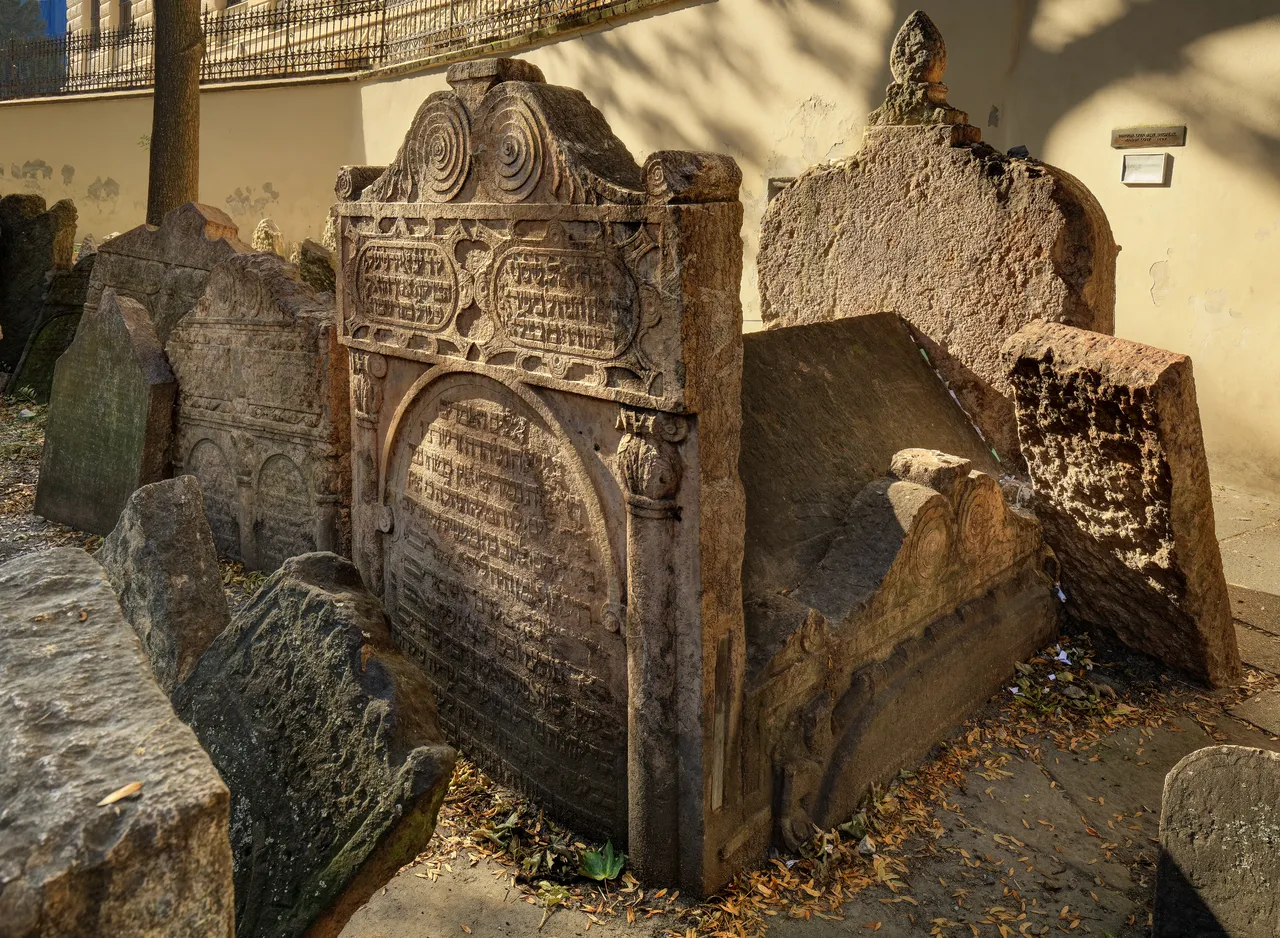
Tomb of Rabbi Judah Loew
This is the resting place of the renowned scholar also known as Maharal. It is frequently visited by those leaving notes and prayers.
Observe the ornate Hebrew inscriptions carved into the stone surface.
The Old Jewish Cemetery in Josefov is one of Prague's most visited historical sites and the most significant Jewish burial ground in Central Europe. This guide covers practical details for visiting the cemetery and what makes its layered structure historically unique.
Quick answer
The oldest Jewish cemetery in Prague is open Monday through Friday and Sunday from 9am to 7pm; it closes on Saturday in observance of Shabbat. Admission is included in the 600 CZK Jewish Museum ticket, which grants access to all open monuments in the Jewish Quarter. The cemetery operated from the early 15th century until 1787, and an estimated 12,000 gravestones mark multiple burial layers—some graves stacked up to twelve deep due to space constraints and Jewish law forbidding the removal of remains.
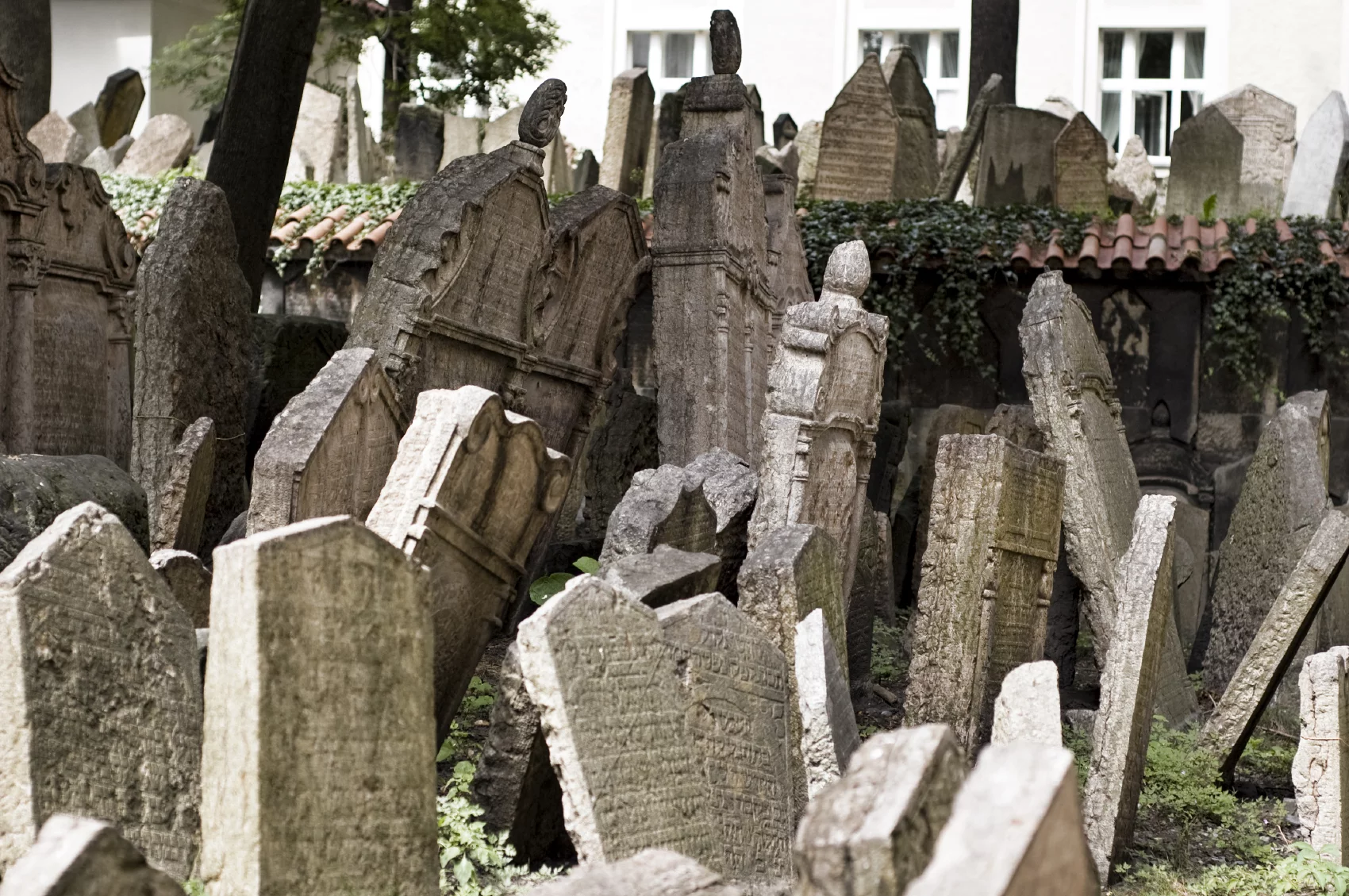
More than 12,000 weathered tombstones rise in uneven rows across a plot smaller than two football fields, marking graves stacked as many as twelve layers deep. The oldest Jewish cemetery in Prague operated for nearly four centuries as the sole burial ground for the city's Jewish community, creating a compressed vertical necropolis unlike any other in Europe. When space ran out, earth was added and new burials placed atop the old—a solution dictated by Jewish burial law, which prohibits exhuming or relocating remains, and by municipal restrictions that confined the Jewish population to a narrow district. The cemetery's oldest legible gravestone dates to 1439, though burials likely began earlier. Among the most visited graves is that of Rabbi Judah Loew ben Bezalel, the 16th-century scholar associated with the legend of the Golem. His tomb, marked by a lion in relief, draws visitors who leave small stones as a sign of respect. The Hebrew inscriptions on many stones record not only names and dates but also poetic epitaphs and symbolic carvings—hands for Kohanim, pitchers for Levites, animals representing family names—that reveal the social structure of Prague's Jewish Quarter across generations. Visiting the cemetery requires walking a designated path that winds through the crowded stones; the uneven ground and narrow passages make mobility aids difficult. Photography is permitted, and early morning light between September and April casts long shadows that emphasize the stones' irregular angles. The site is part of the Jewish Museum circuit, which also includes synagogues and ceremonial halls in Josefov, making it practical to visit multiple landmarks in a single morning. The cemetery closed in 1787 when Joseph II's reforms mandated burials outside city limits, and a newer Jewish cemetery opened in Žižkov. What remains in the old quarter is a preserved archaeological record, untouched since the 18th century and carefully maintained since the 1960s. The stones lean and cluster as tree roots shift the soil, creating a landscape that reflects both the passage of time and the constrained conditions under which Prague's Jewish community lived for centuries.
“More than 12,000 gravestones mark graves stacked as many as twelve layers deep, a compressed vertical necropolis created by Jewish burial law and centuries of spatial constraint.”
The Old Jewish Cemetery is open to visitors daily, with the exception of Saturdays when the site remains closed.
The Old Jewish Cemetery is located at Široká 3, 110 00 Praha 1, in the heart of the Jewish Quarter. The most efficient way to reach the site is via Prague's public transit network, which serves the historic center frequently.
Line A (Green) to Staroměstská station
Lines 2, 17, or 18 to Staroměstská stop
From Old Town Square via Pařížská street
Visitors should aim to arrive between 09:00–10:30 to avoid peak tourist crowds and secure better lighting for photography. Note that street parking in the Jewish Quarter is extremely limited and primarily reserved for residents.
The oldest jewish cemetery in prague was established in 1439, though some scholars place its origins as early as the first half of the fifteenth century. Located in the heart of Josefov, the burial ground served the Jewish community for over three hundred years until its closure in 1787. The site occupies a narrow plot of approximately one hectare, hemmed in by the restrictive regulations that prohibited Jewish expansion beyond designated quarters. Because sacred Jewish law forbids disturbing graves, the community addressed space constraints by layering burials vertically—earth was added repeatedly, creating as many as twelve levels in some areas. Gravestones were repositioned above newer interments, resulting in the dense forest of tilted markers visible today. Among the twelve thousand visible tombstones rest an estimated one hundred thousand individuals, including Rabbi Judah Loew ben Bezalel, the legendary Maharal associated with the Golem myth, who died in 1609. The astronomer and mathematician David Gans, chronicler of Jewish and world history, was interred here in 1613. Avigdor Kara, a fourteenth-century poet who survived the 1389 pogrom, lies in one of the oldest identified graves. The cemetery's Renaissance and Baroque sandstone monuments bear Hebrew inscriptions, relief carvings of grapes for wine merchants, violins for musicians, and blessing hands for Kohanim lineage. Visitors walking the narrow pathways today encounter this layered topography of weathered stone, some markers leaning at sharp angles, others half-sunken into the raised ground. The uneven terrain itself documents centuries of compacted history, preserved as a memorial landscape within the Jewish Museum in Prague's protected sites.
The Old Jewish Cemetery is established as the designated burial ground for Prague's Jewish community.
Rabbi Judah Loew ben Bezalel, the Maharal of Prague, is interred, becoming one of the cemetery's most venerated figures.
David Gans, astronomer and historian, is buried; his tombstone features a Star of David and a goose, a play on his surname.
Holy Roman Emperor Joseph II orders the cemetery closed, ending over three centuries of continuous use.
The community opens new cemeteries in Žižkov and later Olšany to accommodate burials.
The cemetery undergoes restoration and becomes recognized as a historic monument of European Jewish heritage.
Nazi occupation threatens the site, but it survives as planners consider preserving it as a museum of an "extinct race."
The cemetery is integrated into the Jewish Museum in Prague, opening to visitors as a protected cultural landmark.
The Old Jewish Cemetery contains layers of graves dating from the 15th to the 18th century. Visitors can observe the dense arrangement of tombstones that define this historic site.
This is the resting place of the renowned scholar also known as Maharal. It is frequently visited by those leaving notes and prayers.
Observe the ornate Hebrew inscriptions carved into the stone surface.
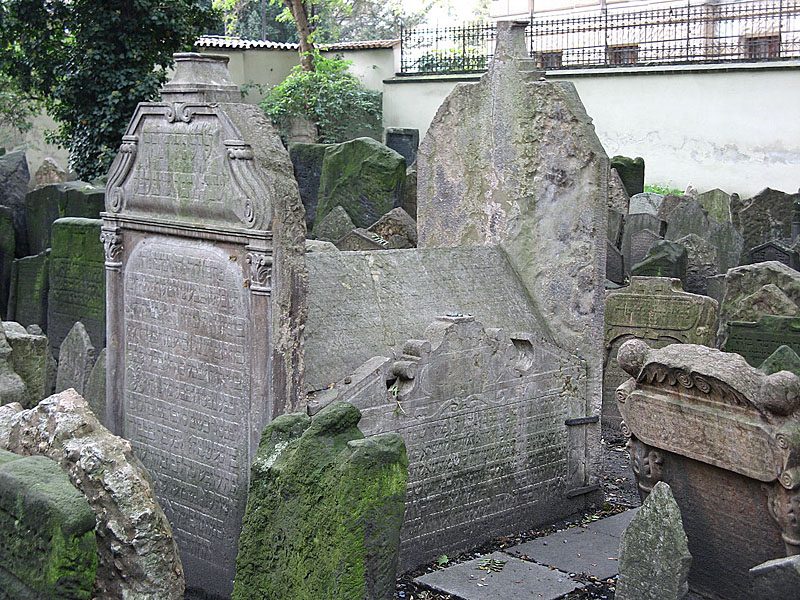
Mordechai Maisel was a significant benefactor and leader of the Prague Jewish community. His tomb reflects his prominence in 16th-century Jewish life.
Look for the distinct markers identifying his gravesite among others.
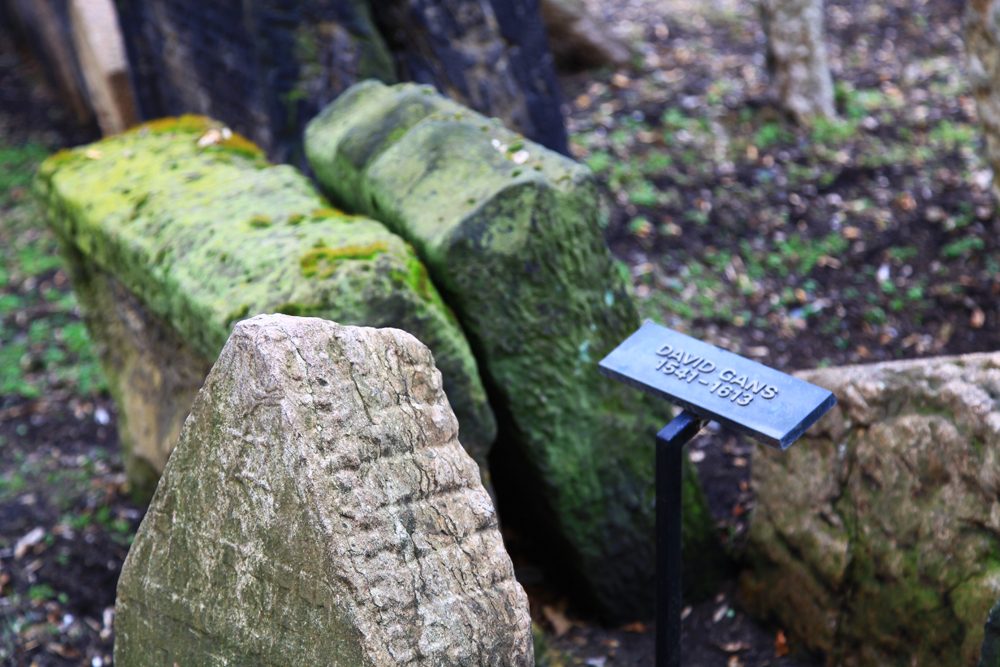
David Gans was a well-known historian and astronomer buried here. His epitaph highlights his contributions to science and Jewish scholarship.
Find this grave near the main pathway through the cemetery.
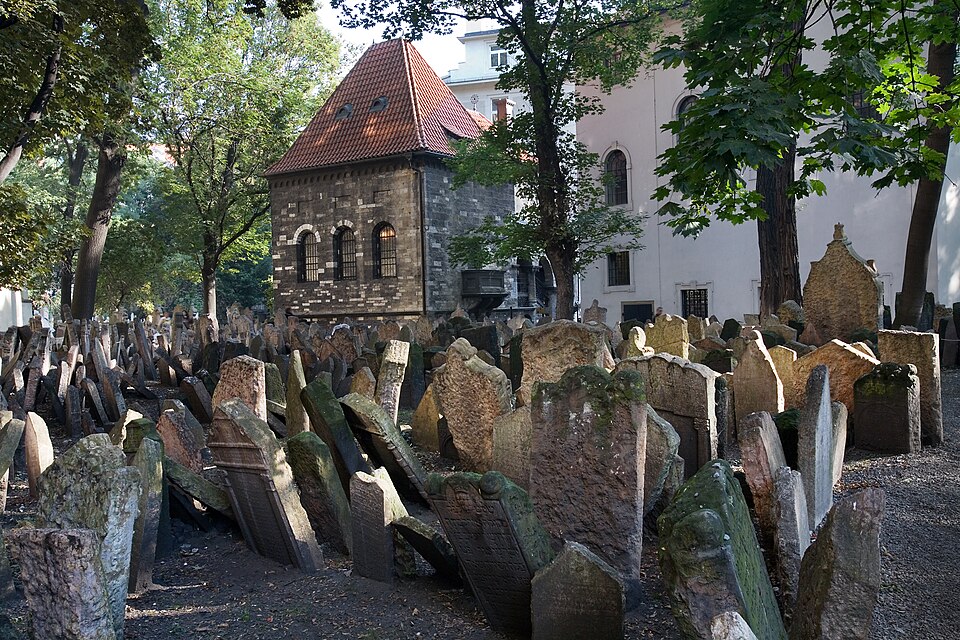
Due to limited space, the cemetery contains multiple layers of graves stacked vertically. This creates the characteristic uneven terrain visible today.
View the layers from the designated visitor walkways.
The Old Jewish Cemetery is an active sacred site where respect for the deceased and Jewish tradition is paramount. Visitors should observe quiet dignity throughout their time in the burial grounds.
Everything you need to know about oldest jewish cemetery in prague
The site is located at Široká 3, 110 00 Praha 1, in the heart of the Jewish Quarter. You can find this historic burial ground nestled among the museum buildings of the area.
Admission is 600 CZK, which provides entry to the Jewish Museum in Prague and covers all open monuments. This single fee grants you access to the site as part of the museum complex.
The cemetery is open from 09:00 to 19:00, Monday through Sunday. Please note that the site remains closed on Saturdays.
We recommend arriving between 09:00 and 10:30 to avoid peak tourist crowds and secure better lighting for photography. Early arrival helps ensure a quieter experience at this significant site.
The cemetery is closed on Saturdays in accordance with religious observance. You may visit on any other day of the week during regular operating hours.
Yes, children are welcome to visit this cultural landmark. It is an educational site that offers a unique look at the history of the Jewish community in the city.